
San Augustine County Sex Offender Checks
The Texas Public Sex Offender Registry is the main public channel for a San Augustine County lookup. It is free and does not require an account for an ordinary search. Name, address, county, and higher-education modes answer different questions. County mode is the best broad first pass. Address mode helps with a point near a home, school, or route, while name mode helps when a legal name is known.
San Augustine County does not publish a separate offender map, local search page, or registry app. That makes the state registry the starting point, not a county list. When a profile or address needs confirmation, contact the local registration authority. The sheriff handles a resident outside a municipality. San Augustine Police Department handles a resident within the City of San Augustine. The official Broaddus site names no town police department, so confirm the proper authority with the sheriff or SAPD instead of assuming.
Texas Public Sex Offender Registry Searches
Texas DPS runs the statewide registry. A precise search starts broad enough to avoid missing a spelling variation, then narrows the result with location or profile details. A result should be checked against the listed photo, aliases, address, offense, and responsible authority. Do not assume that two people with similar names are the same person.
- Open the official Texas DPS registry and choose Name, Address, County, or Institution of Higher Education.
- For a county-wide view, select San Augustine. For a person, enter the legal surname and add first or middle name only when needed.
- Review map or list results. Compare the photo, aliases, physical description, and location rather than relying on a name alone.
- Open the full profile, note the responsible local authority, and call that office when status or address accuracy is in doubt.
| Field label | Type | Required | Use |
|---|---|---|---|
| Last Name | Text | Mode dependent | Enter the legal surname; account for aliases or spelling variants. |
| First Name | Text | Optional or mode dependent | Narrows a name list. |
| Middle Name | Text | Optional | Helps separate close matches. |
| Address | Text | Address mode | Searches a street location. |
| City or ZIP | Text or dynamic control | Location mode | Focuses a geographic search. |
| County | Dropdown | County mode | Select San Augustine. |
| Distance or radius | Dynamic dropdown | Address mode | Confirm the live choices before relying on the boundary. |
| Higher Education | Separate mode | Mode dependent | Runs a campus-related search. |
The address screen can display dynamic distance controls, but the research capture did not reliably render their exact live options. Check the current dropdown before treating a radius as fixed. The result map is a location aid, not a legal boundary or proof that every displayed address has the same verification date.
San Augustine and National Registry Searches
A San Augustine County search answers a Texas location question. The National Sex Offender Public Website, operated by the U.S. Department of Justice, adds participating jurisdictions when a person may have moved across a state line or when a trip spans more than one state. NSOPW is an aggregation layer. Its own results should still be verified with the jurisdiction that supplies the record.
The DOJ's national registry interface shows why a cross-state search can supplement the Texas system.
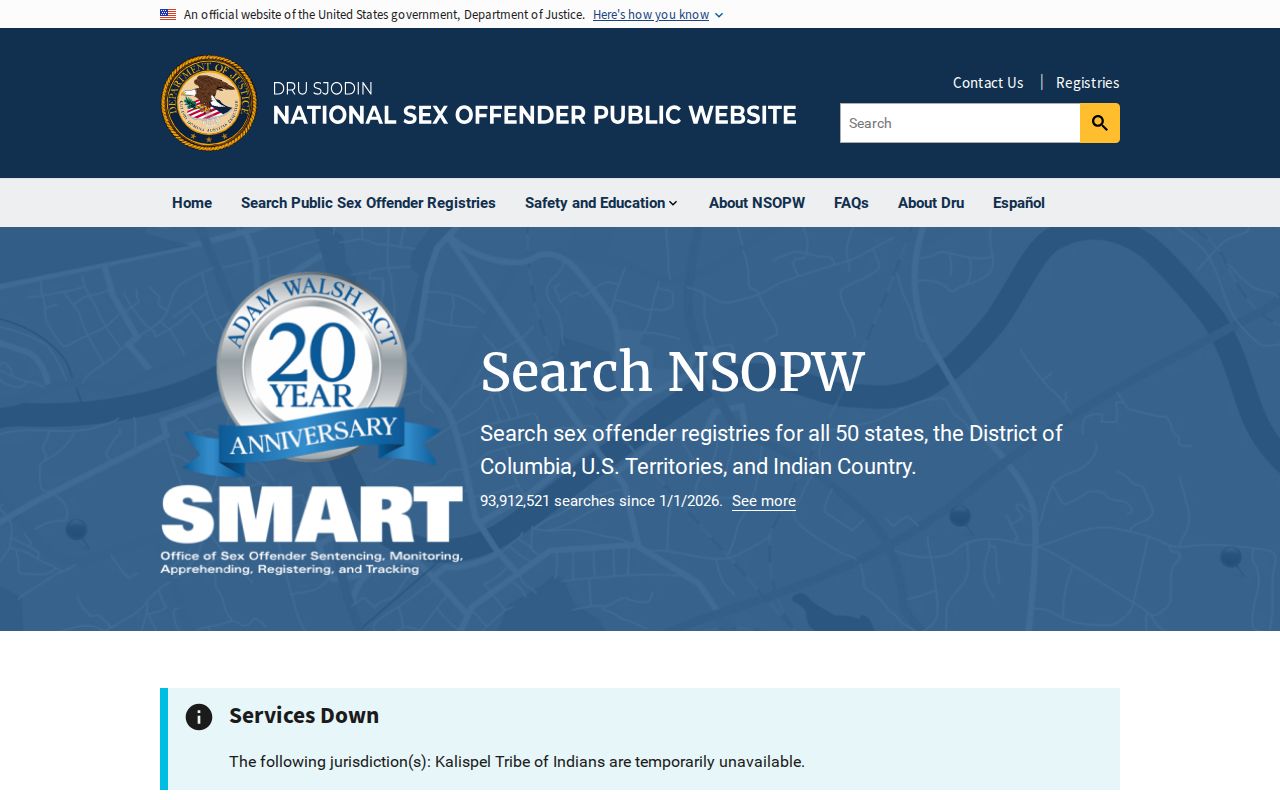
Use the national layer to locate a likely jurisdiction, then return to that jurisdiction's source profile for current details.
Registry Profiles: What They Show
A Texas public registry profile combines identity, location, offense, and registration facts. It is not an arrest log and does not claim that a listed person has committed a new offense. The responsible authority and verification events help readers assess when local contact may be useful. Article 62.005 also withholds several sensitive fields, so the public profile is intentionally not a complete government file.
| Name and aliases | Full public name plus reported aliases used to distinguish identity. |
|---|---|
| Photo and descriptors | Color photo, date of birth, sex, race, height, weight, eye and hair color, and other supported descriptors. |
| Residence | Registered address or detailed geographic location allowed for public display. |
| Reportable offense | Offense, victim age category, conviction date, punishment, and supervision status where supported. |
| Vehicle or school data | Qualifying vehicle details and higher-education information when Chapter 62 requires them. |
| Risk and verification | Texas numeric risk, registration events, verification activity, and responsible local authority. |
| Not public | SSN, driver-license number, phone numbers, online identifier, employer identity, victim identity, and DPS-added protected data. |
The Texas Legislature's Article 62.005 text identifies the public and excluded categories.
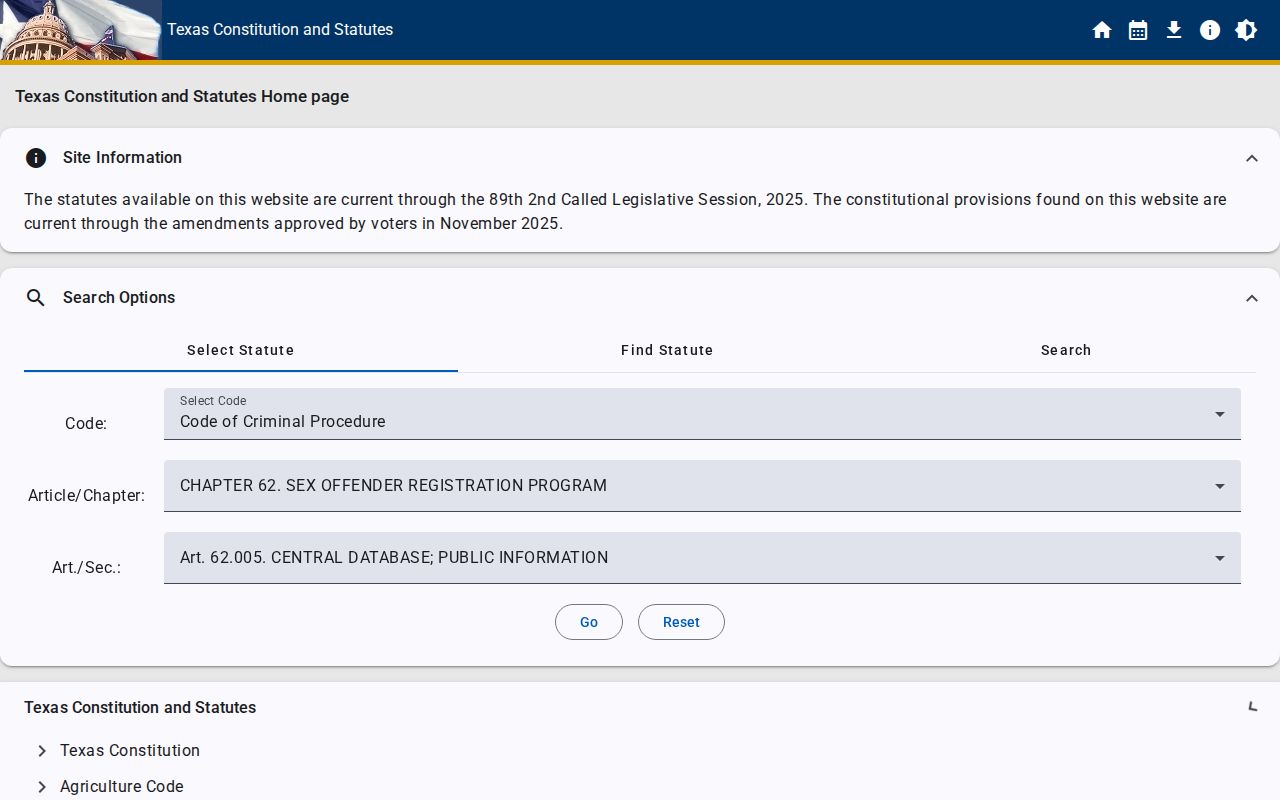
That legal boundary explains why a public result can aid awareness without exposing every identifier held by government.
San Augustine Risk Levels and Tiers
Texas Level 1, Level 2, and Level 3 labels describe a state risk assessment. They are not the same as federal SORNA Tier I, Tier II, and Tier III. A federal comparison document may map an offense for federal analysis, but it does not replace Texas law or set public visibility by itself. Treating Level 2 as Tier II is a common and serious reading error.
DPS describes Level 1 as low danger and not likely to engage again, Level 2 as moderate danger and possible continued conduct, and Level 3 as serious danger and likely continued conduct. Civil commitment is a separate judicial or civil status. None of those labels alone determines whether a San Augustine County profile is public or whether the duty lasts ten years or life.
Registration Levels and Duties in Texas
Texas duration follows the reportable offense and the event that starts the statutory clock, not just the numeric risk label. Adult registration is generally lifetime or until the tenth anniversary after the latest applicable dismissal, discharge from supervision, or release from confinement. Juvenile and transferred-juvenile rules differ. Article 62.101 and the DPS offense matrix control the exact result.
| Category | Duration effect | Verification schedule |
|---|---|---|
| Level 1, low | Risk does not set the term; offense law controls ten years or lifetime. | Usually annual unless another rule applies. |
| Level 2, moderate | Not a federal Tier II duration rule. | Usually annual unless another rule applies. |
| Level 3, high | Can affect community notice, but offense law sets duration. | Usually annual unless another rule applies. |
| Two or more sexually violent offenses | Offense and Chapter 62 rules control. | Every 90 days. |
| Civil commitment | Separate civil status with Chapter 62 duties. | Every 30 days. |
The DPS registration FAQ explains duration, risk, and verification.
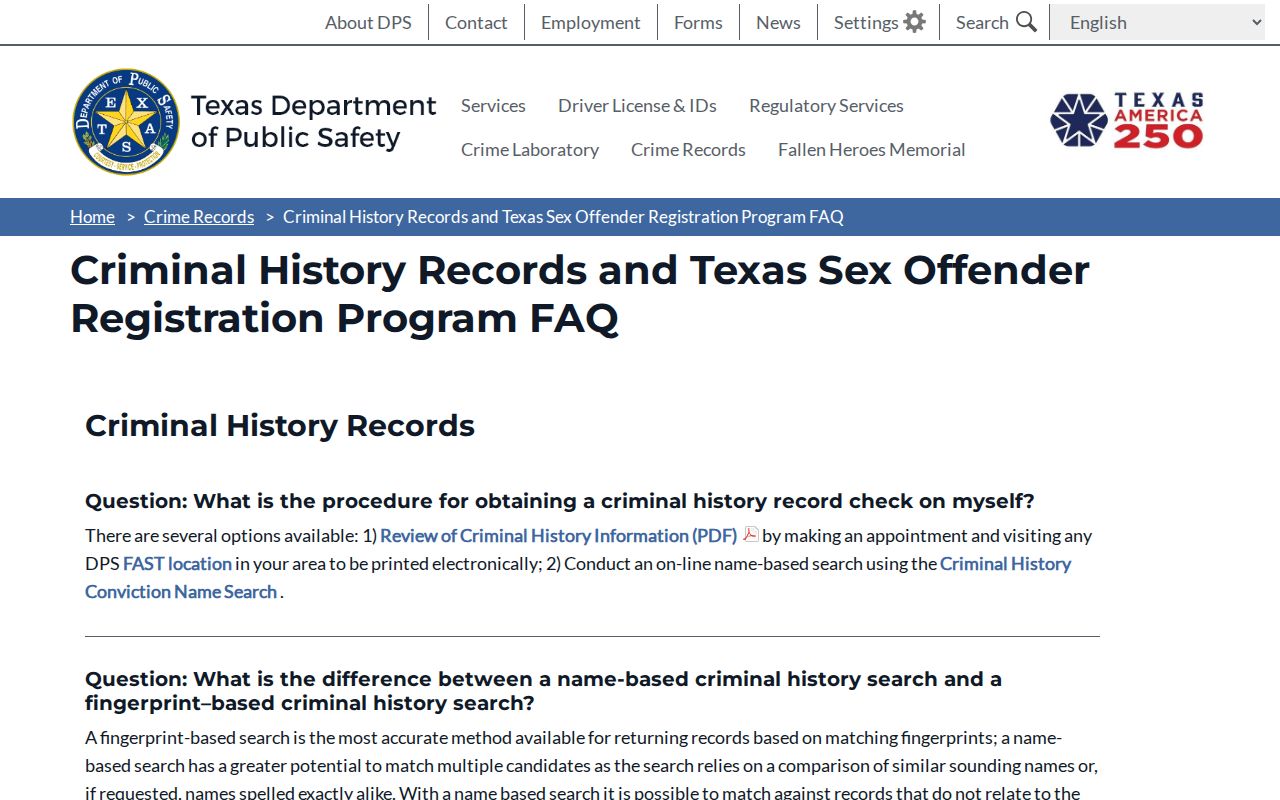
The official explanation is the safer source when a profile's risk label and end date seem to conflict.
San Augustine Move and Notice Rules
Chapter 62 generally uses seven-day reporting rules when a registrant moves or changes required facts. The correct authority depends on the new address. A move inside San Augustine city belongs with SAPD; an unincorporated San Augustine County address starts with the sheriff. Suspected noncompliance should be reported to that office. The public should not attempt to investigate a home or confront anyone.
Enhanced notice can follow a high-risk or civil-commitment move. Texas law can require English and Spanish postcards to non-post-office-box addresses within one mile in an unsubdivided area or within three blocks in a subdivision. Specified schools also receive notice. This is a defined state process, not proof that every move produces the same mailing.
Chapter 62 does not create one statewide school or park residence buffer. A restriction may come from supervision or parole conditions, or from an authorized municipal ordinance. No San Augustine County-wide distance was verified in the research, so a map circle should never be described as a legal residence boundary.
San Augustine Registry App Limits
No official sheriff, San Augustine city, or Broaddus app was found for registry searches, alerts, address maps, or compliance reports. There is also no county-hosted list. Readers should use the Texas DPS search, NSOPW for a multi-state question, and the correct local registration authority for confirmation. A third-party map or alert must not be treated as a substitute for those channels.
The full Texas Sex Offender Registration Program in Chapter 62 is the primary law behind each San Augustine County registry duty.
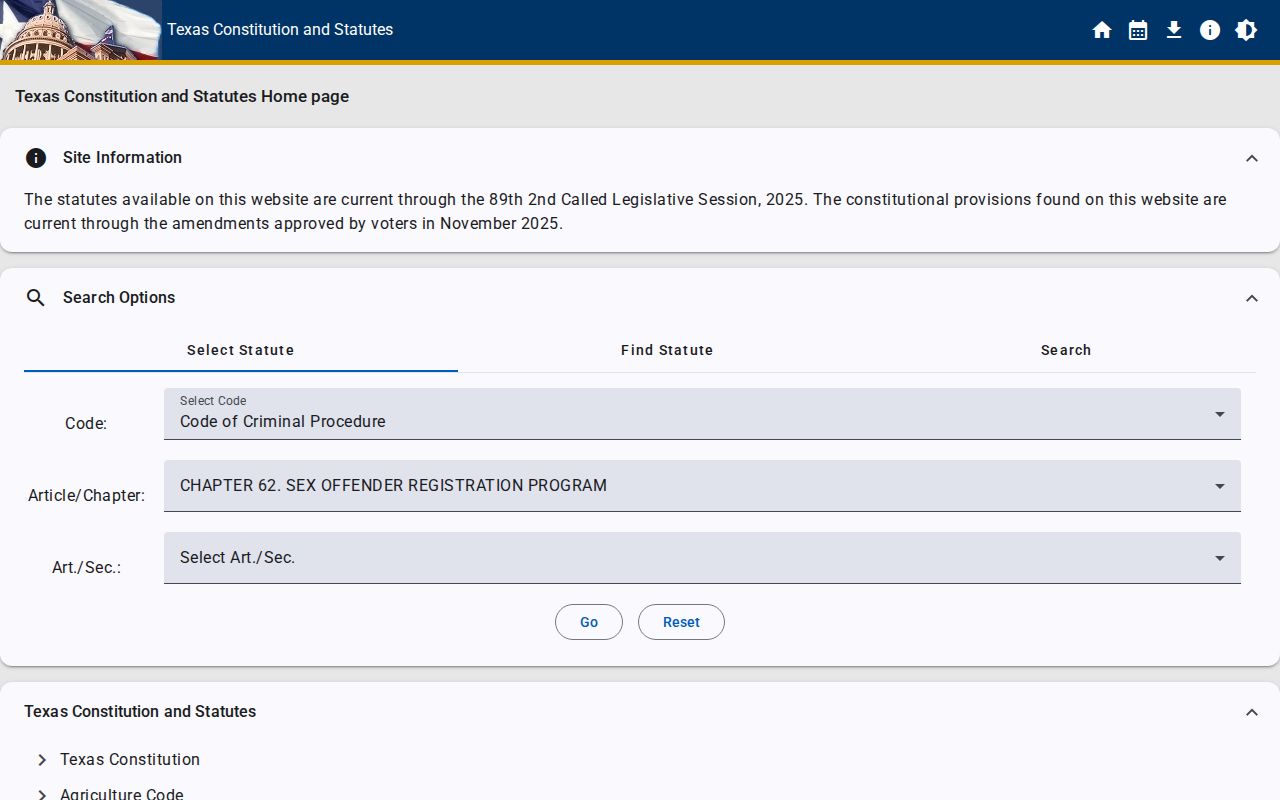
The statute is the right place to resolve a question that a profile summary or map control cannot answer.
Using Registry Information Lawfully
Registry access supports family safety, community awareness, and careful planning. It does not prove fresh misconduct, and a stale address can have several causes. If an address, end date, or compliance marker looks wrong, save the public profile details and contact the listed authority. The office can check its registration file and decide whether investigation or correction is needed.
Article 62.102 makes failure to comply with registration duties a crime. The research did not locate a separate Chapter 62 offense labeled specifically as registry harassment. Other criminal laws still apply to threats, stalking, harassment, property damage, and vigilante acts. The safe course is to report a concern, keep a reasonable distance, and let trained authorities act.
Use the registry for safety, not punishment. Misusing public data for threats, stalking, harassment, discrimination, property crime, or vigilante action may violate Texas law. Report suspected noncompliance to SAPD or the San Augustine County sheriff.