
San Augustine County Criminal History Checks
Start with the record's purpose, not with a broad name box. A current custody question belongs with the San Augustine County Jail. The arresting agency holds its own incident or arrest report. Filed felony cases belong at the District Clerk, while the County Clerk holds the applicable Class A and B misdemeanor files. Fine-only city and precinct matters remain with Municipal Court or Justice Court. Texas DPS is the right source only when the goal is public conviction and deferred-adjudication history reported from across Texas.
The official San Augustine County directory shows why careful routing saves time. Four record keepers may document one event, but each answers a different question. Use a full legal name, spelling variants, an approximate event year, and a cause or booking number when available. Date of birth can help an office separate similar names when its rules permit.

The county directory is the stable starting point when a department page or staff contact changes.
- Identify whether the needed fact concerns an incident, county custody, a filed charge, a final outcome, or statewide history.
- Contact the office that created that record and give precise name, date, location, year, and record-number details.
- Ask for the exact item, such as a docket, judgment, booking entry, or releasable arrest report.
- Compare allegations with the filed charge and final disposition before drawing a conclusion.
- Request a certified court copy or an identity-linked DPS review when an official document is needed.
Four San Augustine Record Keepers
An arresting officer creates the first report. Jail staff then create a separate booking and custody file. A prosecutor decides what, if anything, to file, and the correct clerk opens the cause-numbered court case. DPS later joins fingerprint-linked arrest, prosecutor, court, and supervision reports into the Texas Computerized Criminal History system. That chain explains why a booking charge, a filed charge, and a conviction entry may not match word for word.
San Augustine County has no single local database that merges all four layers. A no-result in one place does not erase a record held elsewhere. The clerk's judgment is the best source for the case outcome. The jail answers whether a person is in county custody. DPS supplies the narrower public statewide product, while a fingerprint review offers a stronger way to inspect one's own Texas record.
San Augustine County record flow: Sheriff or police report → county jail booking → prosecutor filing decision → clerk case and judgment → reportable DPS CCH update. Phone, counter, fax, written TPIA requests, clerk copies, and the DPS name search each open a different point in that chain.
Official Background Checks in Texas
The Texas Department of Public Safety Crime Records Service maintains CCH. Its public name search discloses reported Texas convictions and deferred adjudications, not every arrest or every page in a court file. The live product requires an account and prepaid credits. Each search uses one credit even when there is no match, and opening more than one complete candidate record consumes more credits. Preview details can help avoid selecting the wrong person.
For an identity-linked review of one's own record, DPS uses FAST through IdentoGO. The research lists a $15 DPS record check and $10 FAST capture fee. No active enrollment site was verified inside San Augustine County, so the appointment locator should determine the closest site on the booking date. A service code, accepted identification, and payment are required.
The official FAST appointment gateway documents the fingerprint route.
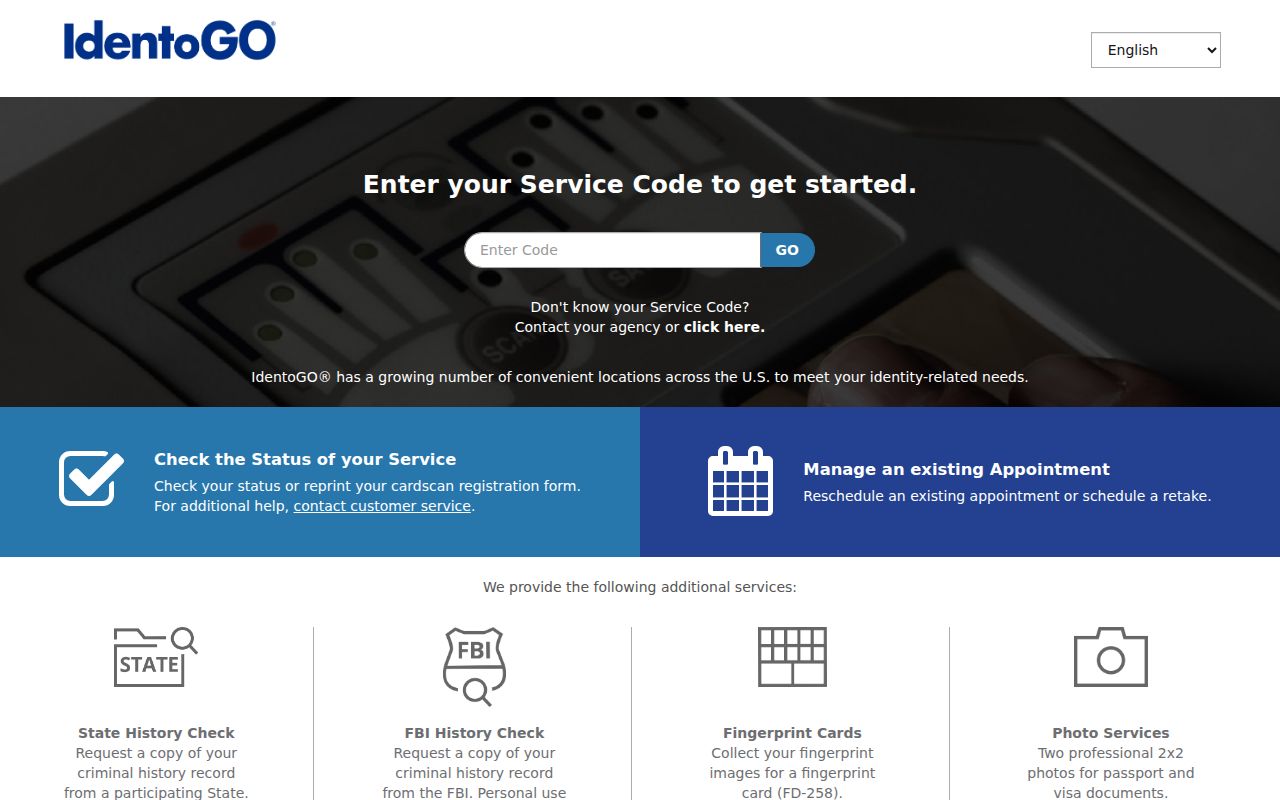
Fingerprint matching is especially useful when a common name or alternate spelling creates doubt in San Augustine County records.
| Official product | Published base fee | Scope |
|---|---|---|
| DPS online name search | $1 credit, plus stated card charges | Public Texas conviction and deferred data |
| DPS offline name check | $10 | Name-based DPS product |
| DPS own-record check through FAST | $15 plus $10 capture | Fingerprint-linked Texas review |
| Two FAST hard cards | $20 | Fingerprint cards, not the record fee |
| FBI Identity History Summary | $18 plus capture or channeler costs | Subject-only federal identity history |
San Augustine DPS Name Search
The TxDPS Criminal History Conviction Name Search asks for full first and last names. Middle or maiden names are optional, and a complete or partial birth date can narrow candidates. DPS warns against nicknames, initials, or partial names. Soundex and partial-name matches widen results, so the preview must be checked against known identifiers before a full record is opened.
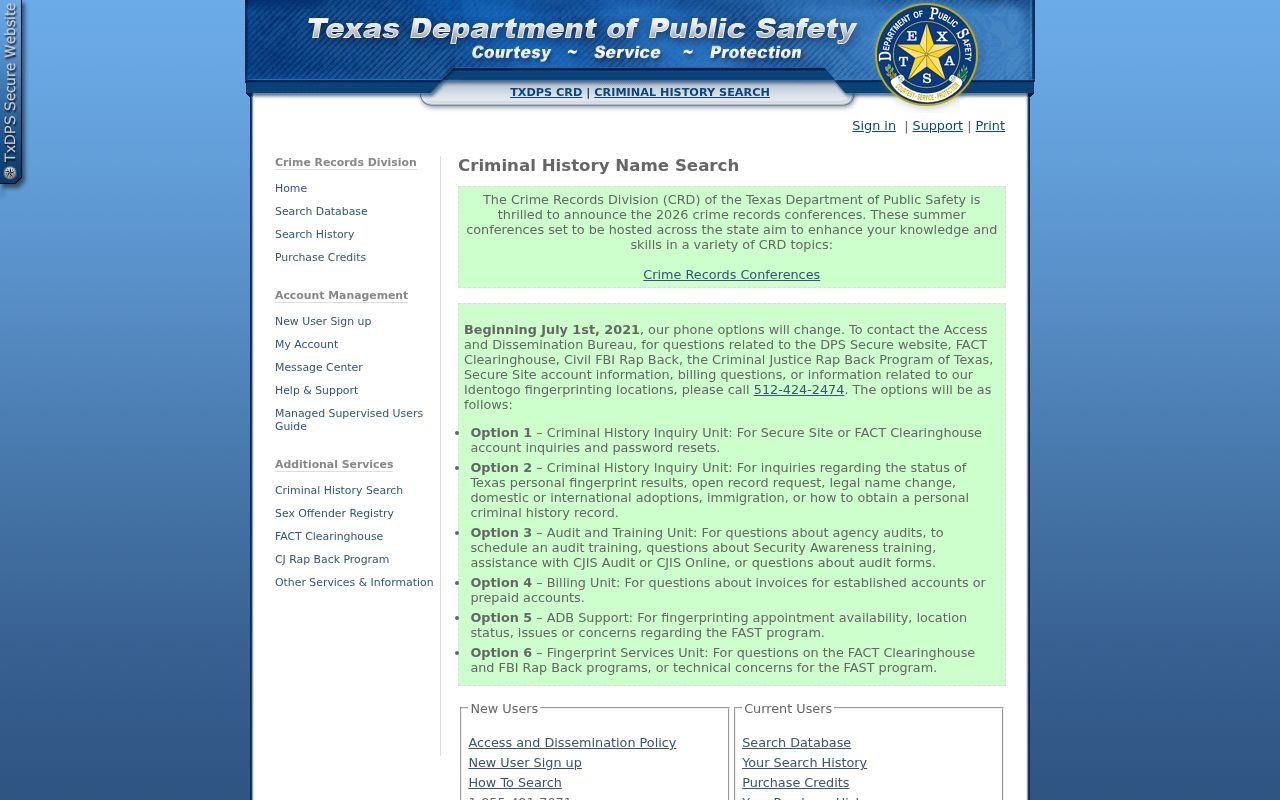
The portal's statewide reach is useful, but it cannot replace a San Augustine County clerk's certified judgment or a fresh jail inquiry.
| Field | Required | Use |
|---|---|---|
| Last Name | Yes | Enter the full legal surname |
| First Name | Yes | Enter the full legal given name |
| Middle or Maiden Name | No | Run alternate legal names separately when needed |
| Complete Birth Date | No | Strongest name-result narrowing field |
| Partial Birth Date | No | One or more date parts can reduce matches |
Kinds of Criminal Records
San Augustine County records describe different steps. An incident report can exist without an arrest. A booking record shows intake and custody, not guilt. A complaint, information, or indictment states what was filed in court. The docket then tracks hearings, orders, pleas, judgment, and sentence. DPS CCH joins reported events, but its public name-search view is narrower than the full identity-linked history.
Warrants come from courts and are executed by law enforcement. Community supervision, the Texas term used for probation, appears most reliably in the sentencing court's judgment. TDCJ and the Board of Pardons and Paroles handle the state prison and parole layer. The Texas registry is a separate Chapter 62 system with its own search and disclosure rules.
- Agency report: narrative, event facts, initial allegations, officers, and evidence references.
- Booking file: intake time, agency, charges, bond, custody, and release data.
- Court case: filed charge, docket, orders, disposition, judgment, and sentence.
- CCH event chain: fingerprint-linked arrest and later reported prosecutor, court, or supervision events.
- Warrant or supervision record: court process, status, and later compliance or release events.
The TDCJ Online Inmate Search covers sentenced state prisoners rather than people held only in the county jail.
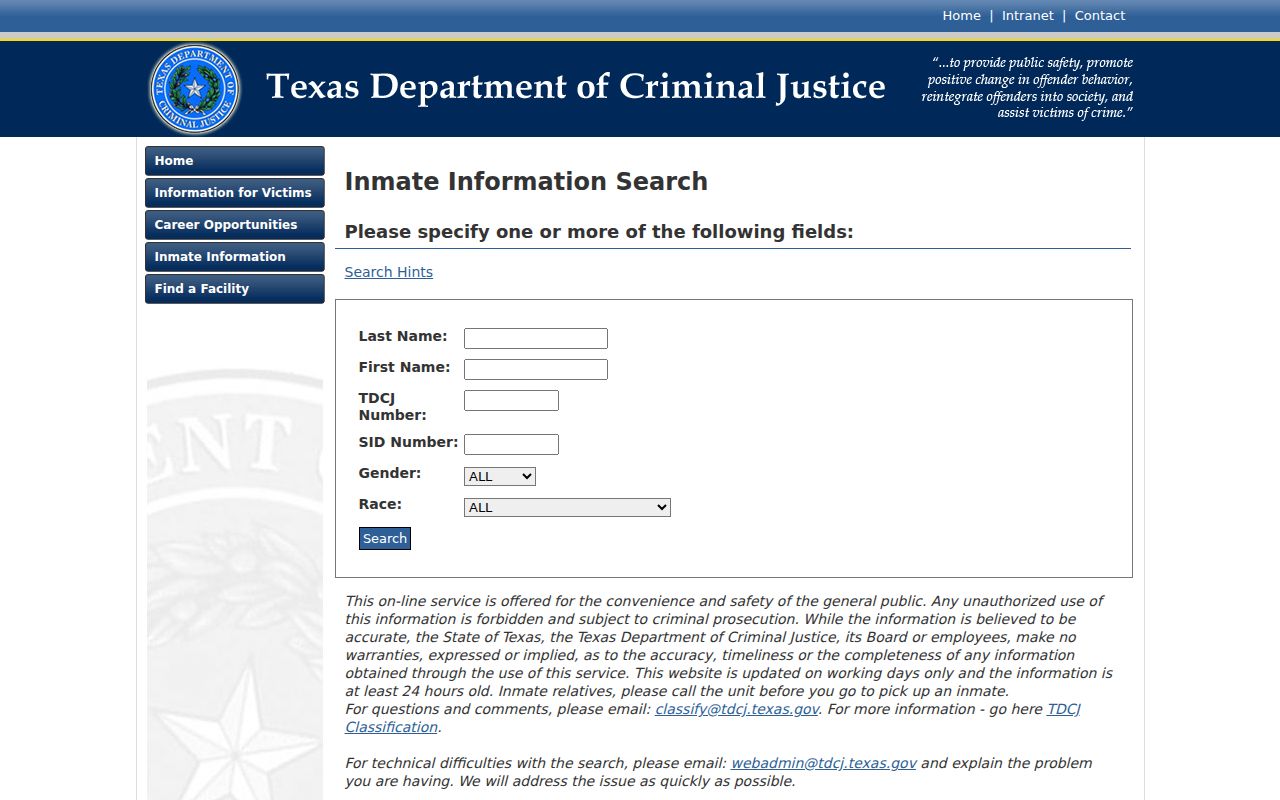
Use a TDCJ number or SID when known; a name search can return several people.
San Augustine Justice Campus Counters
Three nearby North Harrison addresses do not lead to one shared records desk. The sheriff and county jail are at 219 N Harrison. Justice Court and the constables use 221 N Harrison. The County Clerk is at 223 N Harrison. Felony files are elsewhere, at the District Clerk's Room 202 counter in the courthouse at 100 W Columbia. Asking only for the “justice center” can send a visitor to the wrong door.
The County Clerk's official page confirms the misdemeanor-file starting point at 223 N Harrison.
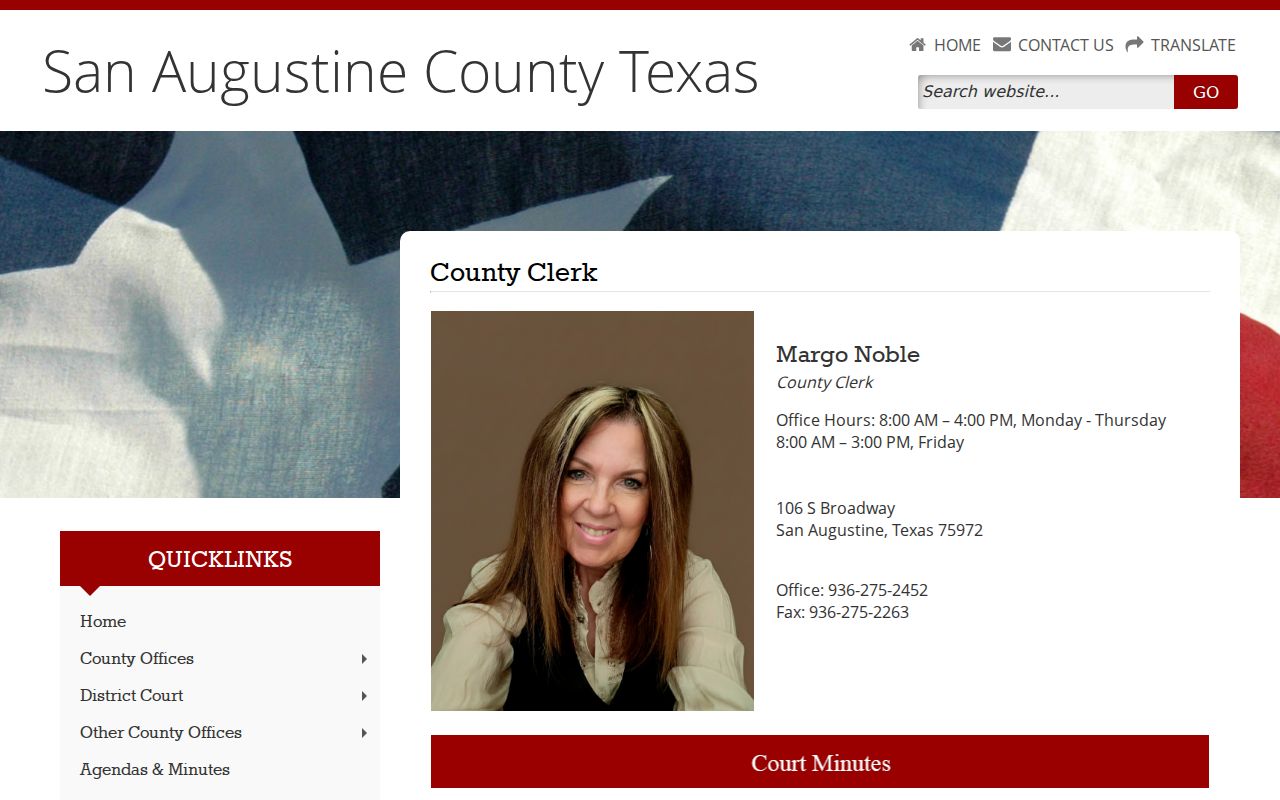
For applicable Class A and B misdemeanor records, call 936-275-2452 and ask for the exact docket, order, or judgment needed.
District Clerk
100 W Columbia, Room 202
San Augustine, TX 75972
936-275-2231
Mon-Thu 8-4; Fri 8-3
County Clerk
223 N Harrison
San Augustine, TX 75972
936-275-2452
Sheriff and Jail
219 N Harrison
San Augustine, TX 75972
936-275-2424
Justice Court
221 N Harrison
San Augustine, TX 75972
936-275-3552
San Augustine County Criminal Records: What They Contain
No single San Augustine County record contains every field. A CCH identification segment can include legal names, aliases, birth date, physical descriptors, a Texas SID, and an FBI number. Its arrest cycle can show the arrest date, agency ORI, initial charge, statute, class, and tracking control number. Later reports add prosecutor action, cause number, court, filed charge, disposition, sentence, and supervision data.
A clerk's file goes deeper into the court proceeding. It can contain the charging instrument, docket events, hearing settings, bond, attorneys, motions, orders, costs, judgment, and sentence. A booking file stays focused on custody. These sources should be compared because an intake allegation can change after prosecutor review.
| Name and identifiers | Legal names, aliases, birth date, descriptors, SID, and fingerprint-linked identifiers where reported. |
|---|---|
| Arrest and booking | Agency, time, initial charges, booking number, bond, custody, and release details. |
| Charges and statutes | Arrest allegation, prosecutor action, filed offense, level, and controlling law. |
| Disposition | Dismissal, acquittal, conviction, deferred adjudication, or another recorded result. |
| Sentence | Confinement, fine, community supervision, restitution, and related orders. |
| Custody or supervision | County release, state custody, probation, or parole events where the source reports them. |
The District Clerk contact page identifies the courthouse counter that holds local felony pleadings and orders.
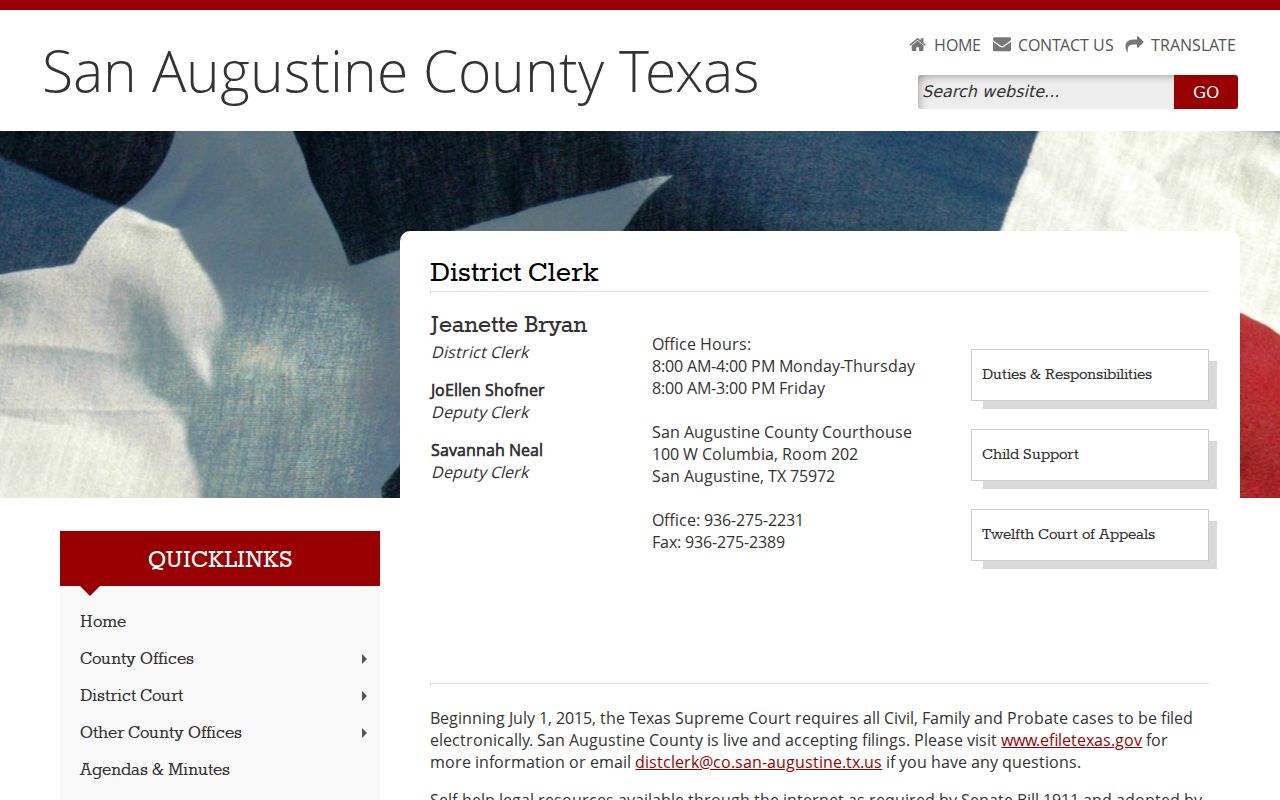
Room 202 holds the filed case record; the prosecutor's Room 302 work file is not a substitute for it.
San Augustine Jail Search Fallback
No official San Augustine County web roster, daily arrest blotter, or sheriff app was found. Call the sheriff and jail at 936-275-2424 or visit 219 N Harrison for current custody. Give the full legal name, date of birth, approximate arrest date, arresting agency, and booking number when known. If a phone answer is not enough, send a focused written Texas Public Information Act request by mail or fax. No local form, posted copy fee, records email, or turnaround was located.
The official sheriff page is the source for the El Camino Justice Center contact and jail information.
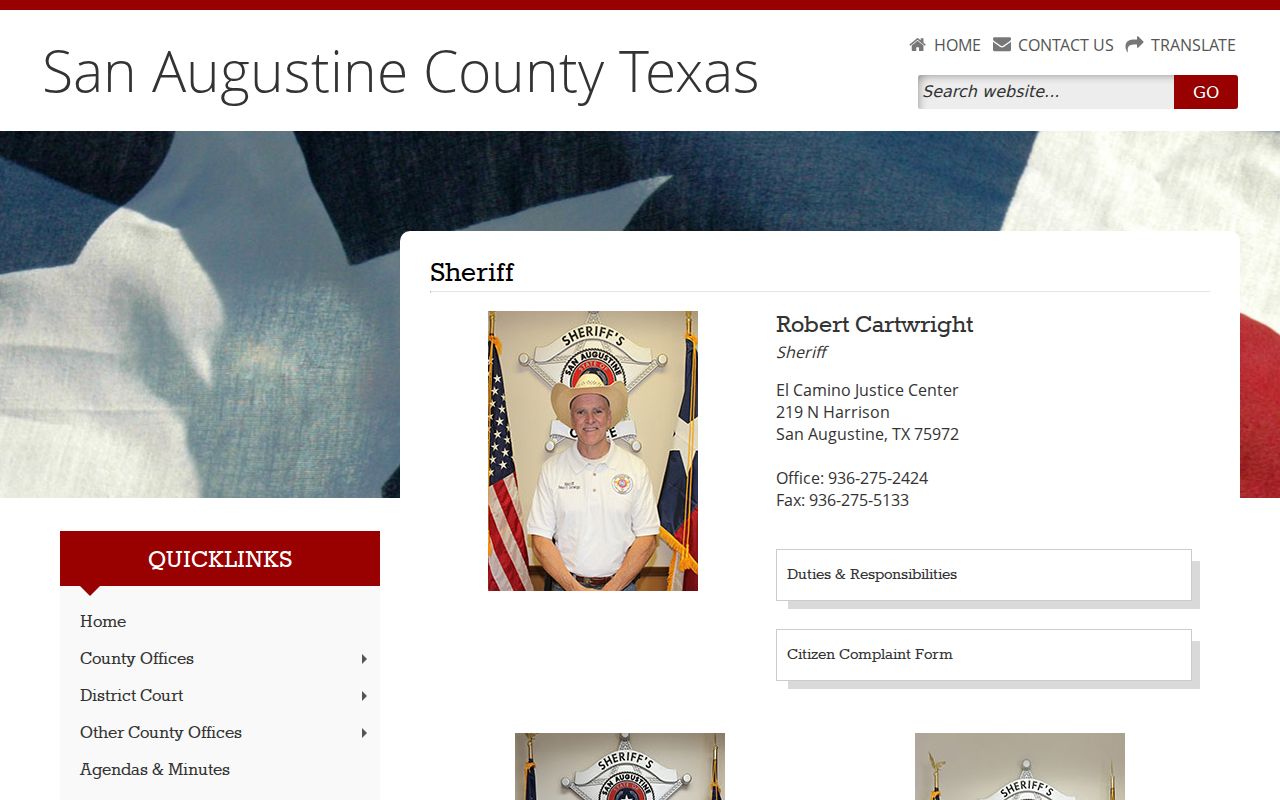
The same main number is also the published after-hours justice-campus contact, but the county does not label it a dedicated inmate hotline.
Once a person leaves county custody for a state sentence, switch to TDCJ. For filed bond orders, settings, and disposition, switch to the proper clerk. County jail, state prison, and court records describe different stages.
Texas Public Access Laws
The Texas Public Information Act applies to records held by governmental bodies, including releasable sheriff and police material. It does not turn every active investigation, juvenile file, victim detail, medical fact, or private identifier into public data. Filed court records are obtained from the responsible clerk. DPS criminal-history dissemination follows a separate Government Code framework, and registry disclosure follows Chapter 62.
Key San Augustine County access laws:
Government Code Chapter 552 grants access to governmental records while allowing defined law-enforcement and privacy exceptions.
Government Code Chapter 411 controls criminal-history confidentiality, public conviction data, and nondisclosure.
Code of Criminal Procedure Chapter 66 assigns the reporting duties that build CCH.
Code of Criminal Procedure Chapter 62 governs sex-offender registration and public registry information.
A precise request improves the chance of a useful response. Identify the event type, date, location, agency, report number, and preferred format. Ask for an itemized estimate if the cost is unknown. Court files do not travel through the sheriff's TPIA channel.
San Augustine Warrant Verification
San Augustine County publishes no active-warrant database, Most Wanted list, or app search. Verification must cross the sheriff and the court that issued the process. The sheriff can address county execution information. Justice Court handles its precinct fine-only matters, Municipal Court handles city matters, the District Clerk supplies felony cause information, and the County Clerk supplies applicable misdemeanor cause information.
The Justice Court page provides the JP counter, phone, email, and citation-payment route.
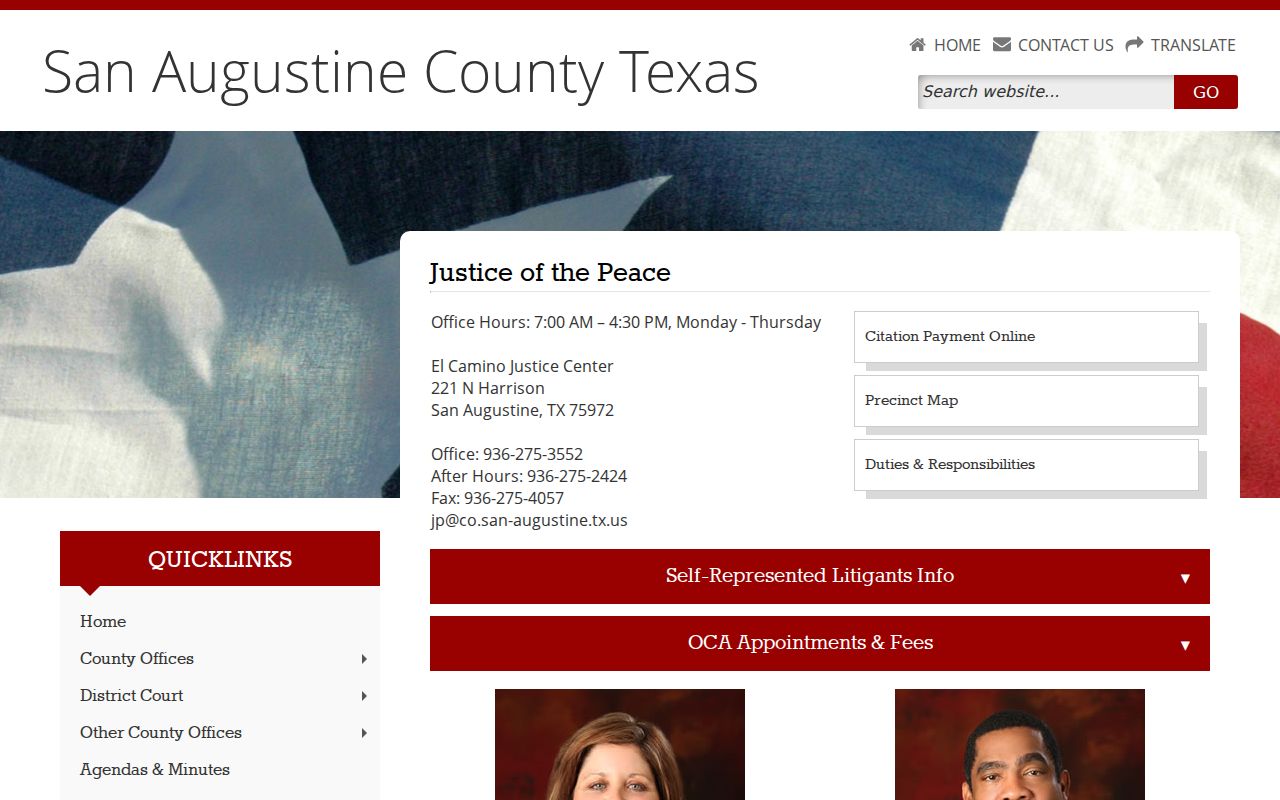
A payment screen is not proof that a capias or warrant has been recalled. Anyone resolving their own warrant should confirm the allowed appearance, payment, or bond method with the issuing court, keep the receipt or clearance, and recheck status after processing.
Arrest warrants generally follow a probable-cause request. A bench warrant or capias can follow a missed court setting or another judge's order. A capias pro fine concerns collection after a fine and cost judgment. Sealed warrants, sealed indictments, and juvenile matters will not appear through ordinary public access.
Restricted, Sealed & Expunged Records
Texas expunction under Chapter 55A can remove and destroy qualifying arrest records. It is limited to statutory grounds such as certain acquittals, pardons, dismissals, no-bills, mistaken identity, and other listed situations. It is not a broad remedy for an ordinary final conviction. A petition generally identifies the arrest, charges, cause, and every agency holding a copy so each respondent receives notice.
An order of nondisclosure works differently. It seals qualifying criminal-history information from ordinary public release but does not destroy it, and authorized agencies retain access. The Office of Court Administration publishes distinct forms for different Government Code routes. The exact offense, result, waiting period, and prior history decide which route, if any, applies. San Augustine County's filing fee and a local packet were not found, so applicants should ask the District Clerk before filing.
Juvenile files follow Family Code Chapter 58. Social Security numbers, bank details, driver-license data, protected victim facts, and other private identifiers can be redacted even when the rest of a record remains open.
Dismissed San Augustine Records Persist
A dismissal or acquittal states the court outcome. It does not automatically delete the earlier arrest report, booking entry, fingerprint cycle, or public index. Deferred adjudication is not an ordinary final conviction, yet it may remain in public DPS history unless a valid nondisclosure order restricts it. The certified judgment or order is the best proof of what the court actually decided.
If stale or wrong data remains, compare the San Augustine County clerk record with the disputed DPS result. DPS directs correction callers to 512-424-7256. Keep the matching identifiers, arresting agency, court disposition, and certified correction document. After an expunction or nondisclosure order, recheck both the county index and one's DPS record because transmission and sealing occur in stages.
Online convenience can also mislead. re:SearchTX is a statewide starting point, but the Texas Judicial Council's published data report documents a criminal-record coverage limit.
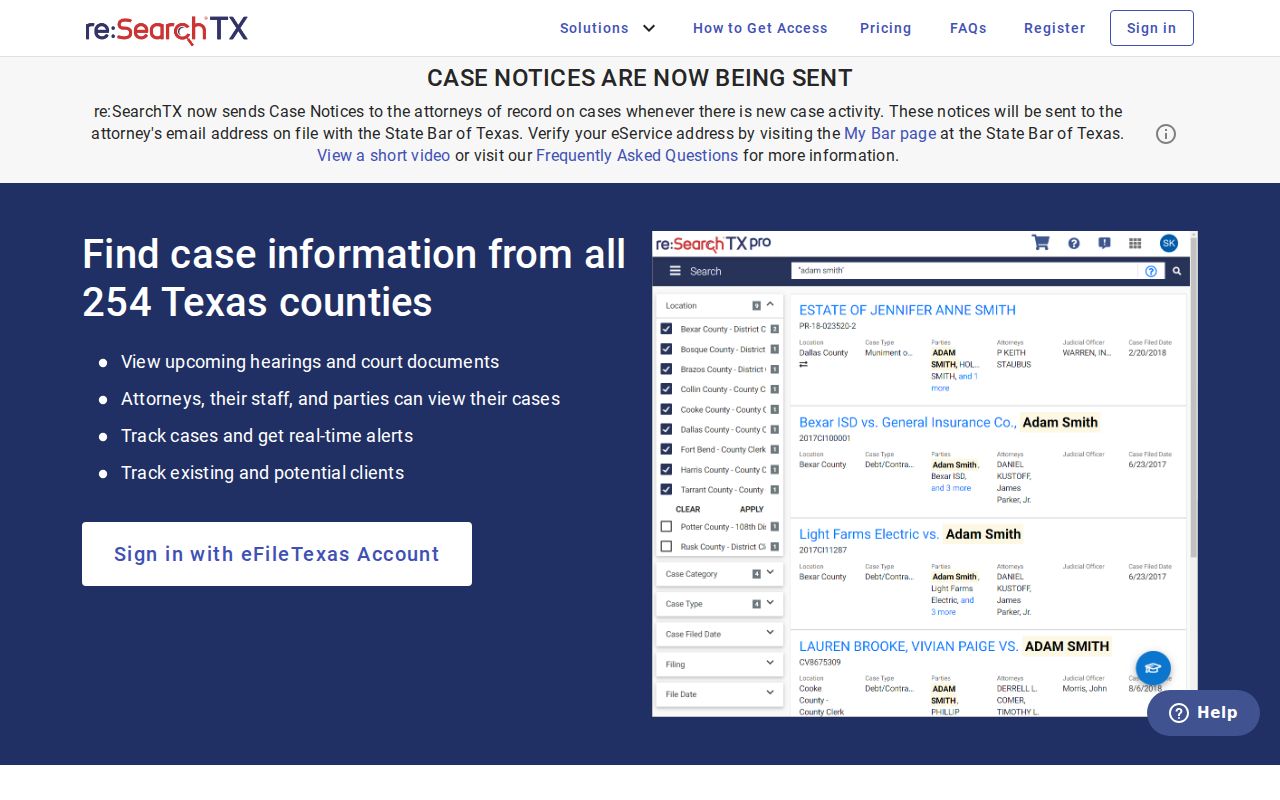
A blank statewide screen does not prove that no San Augustine County criminal case exists.
City-by-City Criminal Records in San Augustine County
Only two incorporated places appear in the official research ranking. San Augustine city had 1,920 residents in the 2020 Census, and Broaddus had 184. Their local routes differ. San Augustine Police writes city incident and arrest reports and Municipal Court handles fine-only city matters. Broaddus publishes no separate police department and officially routes police contact to San Augustine Police, while a written town public-information request can address records the town itself holds.
San Augustine Record Check
1,920 residents · Start with city police or Municipal Court, then trace county booking and filed charges.
Broaddus Record Check
184 residents · Confirm the actual responding agency and use the town's written-request channels.
Rural San Augustine Record Access
The Census county profile counted 7,918 San Augustine County residents in 2020 across 530.66 square miles. Public counters are split among West Columbia, North Harrison, South Broadway, and Highway 96. In a rural county with no jail roster, criminal portal, police report portal, warrant list, crime map, or sheriff app, phone and written requests are core access tools rather than second choices.
Ask each office to confirm its current hours, payment method, archive process, and copy fee before travel. The county has not published parking, entry-screening, locker, transit, or detailed accessibility information for the courthouse and justice campus. Do not infer those facts. A narrow request sent to the correct custodian is more useful than a broad request for a “background check.”
San Augustine County probation is local Community Supervision and Corrections Department work, while parole release decisions belong to the Texas Board of Pardons and Paroles and supervision belongs to the TDCJ Parole Division. The sentencing judgment is the public starting point for community supervision. Detailed officer casework is not a general public lookup.